Sun Pyramid
Before this was built, evidence of a 13.5m long freestanding wall was reported on the site of the Pyramid of the Sun, dating from shortly before 1 AD, with the building axis at 11.5 degrees.
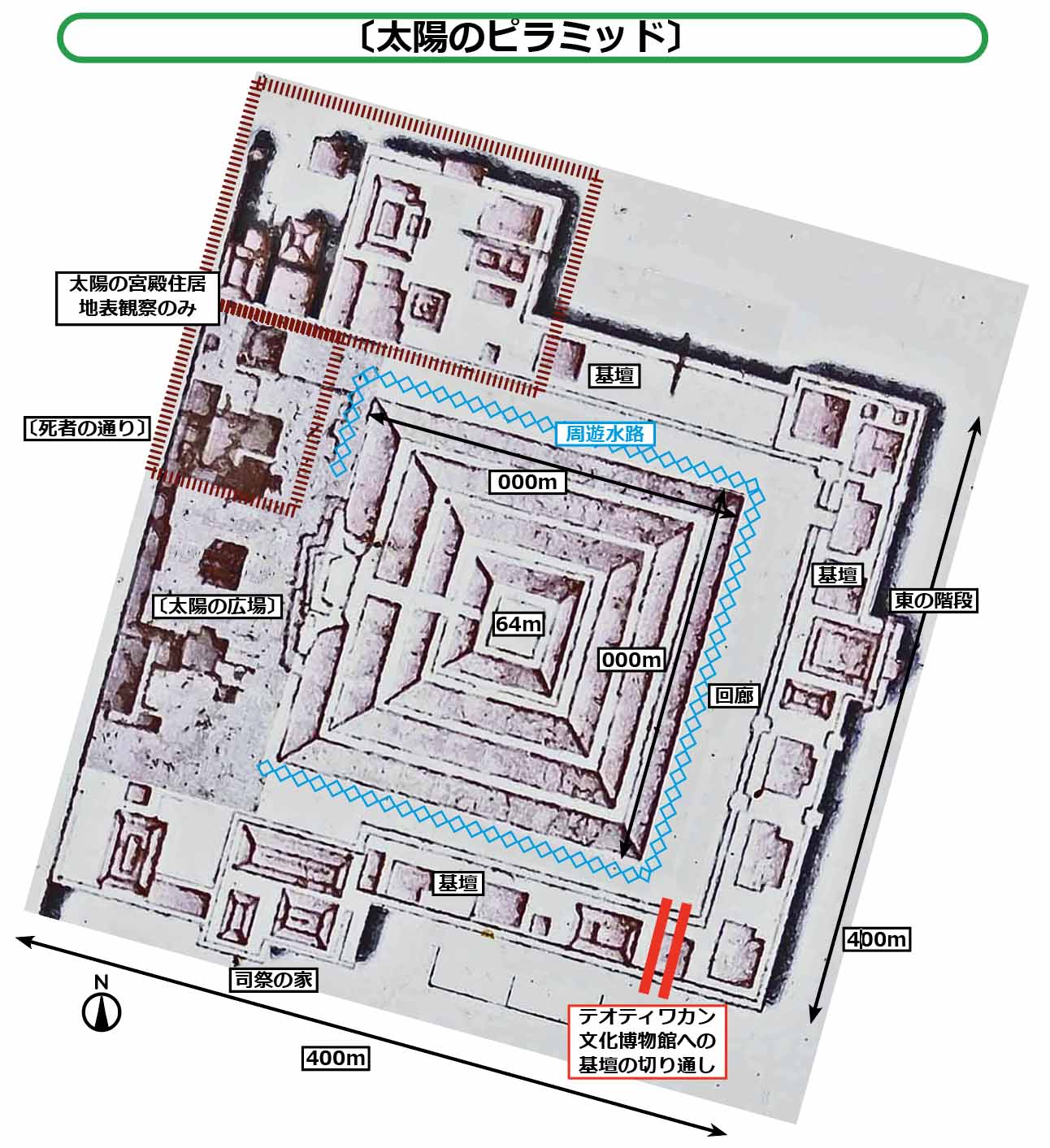
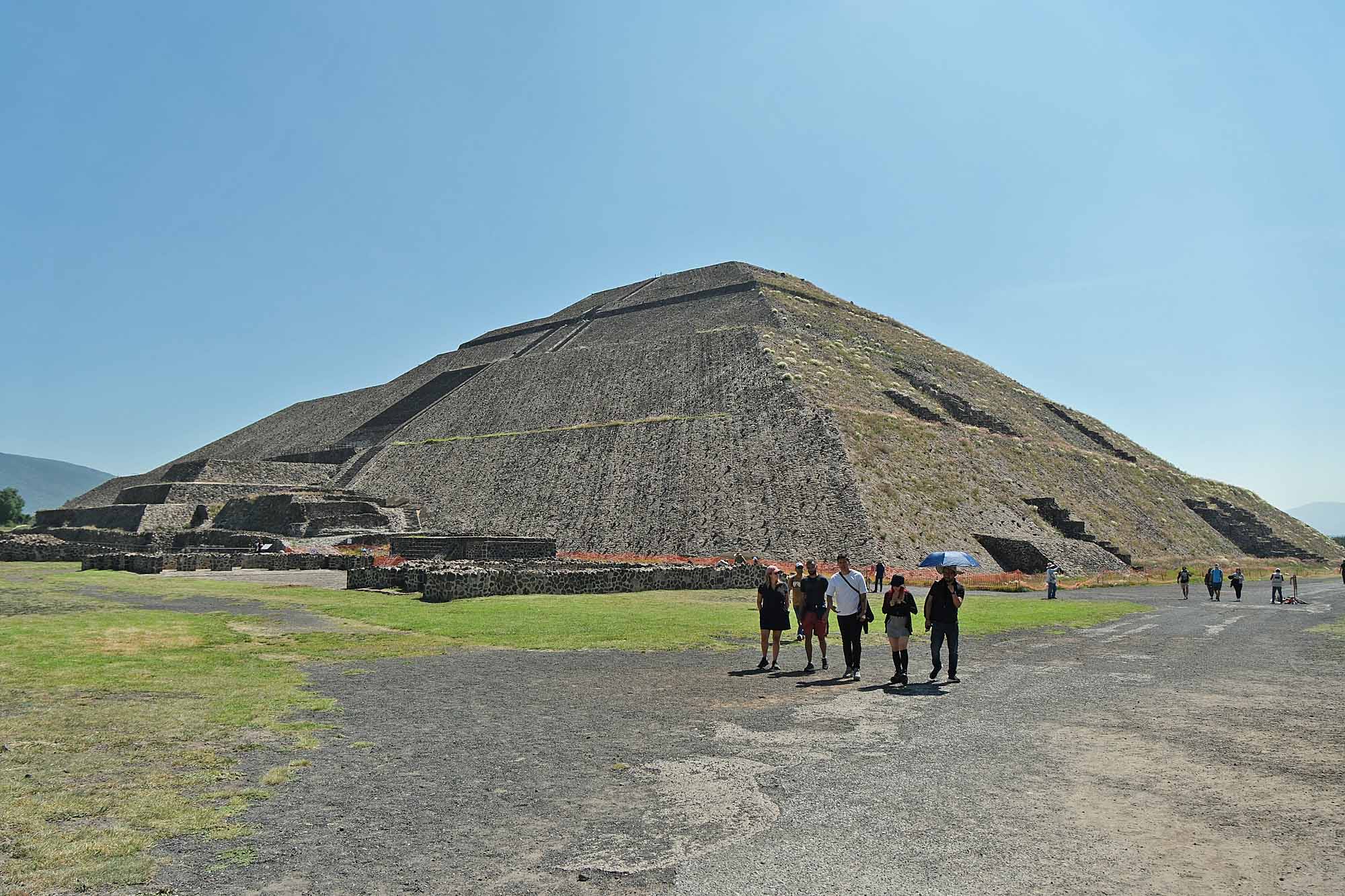
The first phase of construction was carried out in 200 AD, with the entire structure measuring approximately 200m on each side and 64m high being constructed at once.
Around 250 AD, the Adosada was added as a second phase of construction.

When you see it in person, you get the impression that the angle is a little crooked. This is the only place where the architectural axis is at a 22-degree angle. This is not seen anywhere else in Teotihuacan.
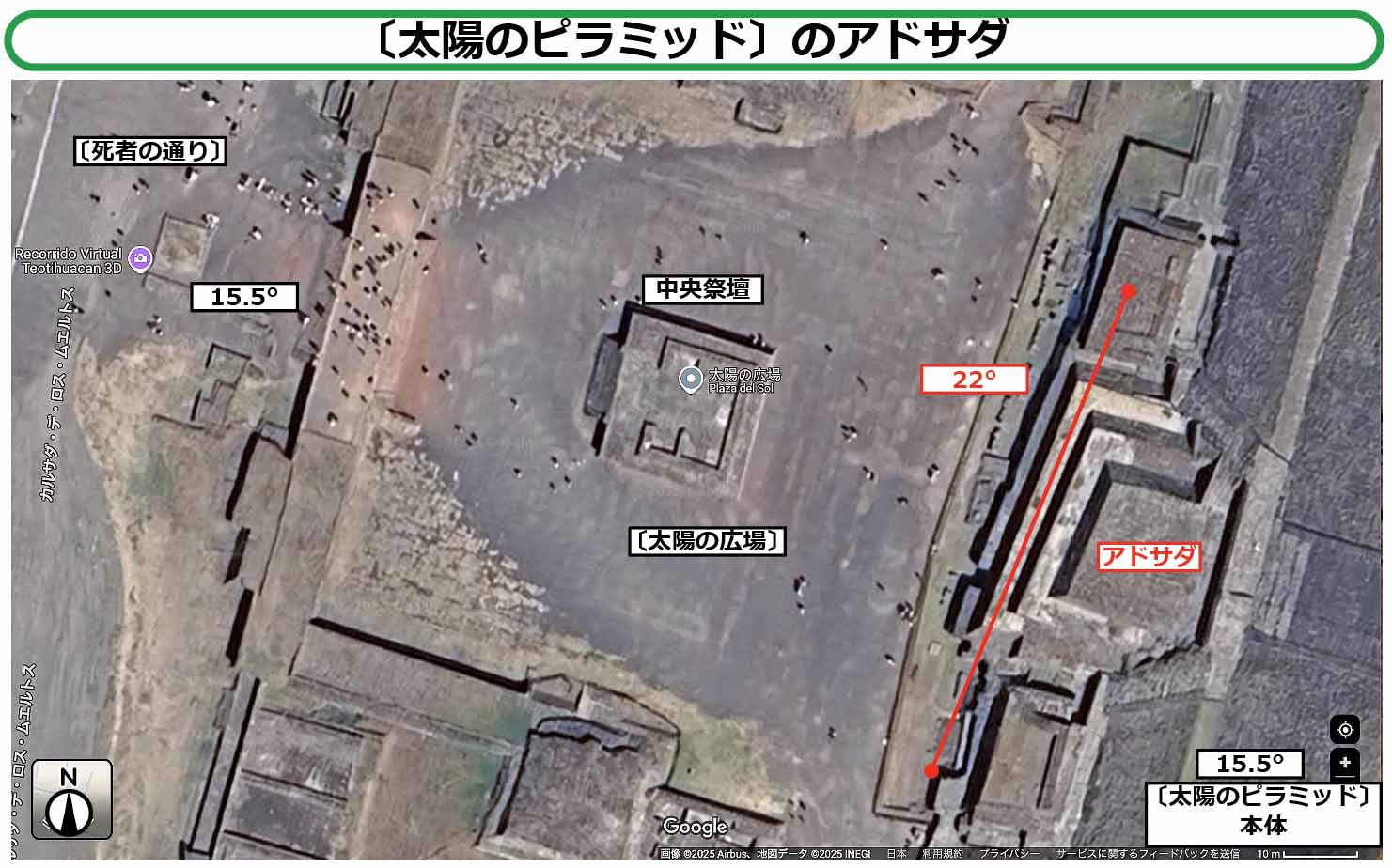
If the Pyramid of the Sun was a building constructed as a place of worship to the gods of nature, then the west side is the most important side, facing the setting sun. Neither 15.5 nor 22 degrees coincide with the sunset points of the vernal or autumnal equinoxes, or the beginning or middle of the rainy or dry seasons. There are several gentle depressions in the western ridge of Cerro Colorado, but these do not reflect the position of the sun, which is important for agriculture. What does this mean?
My vague reasoning is as follows:
1. The top priority is the height of 64m.
2. It must not deviate from the 15.5-degree angle established in 120 AD.
3. Since it generally faces west, solar festivals can be held there without having to worry about the exact angle.
Still, it is difficult to explain why Adosada alone turned 6.5 degrees north after 50 years. It's a bit puzzling.
Around 350 AD, the entire main body was covered with a thick layer of 8m of paint as the third construction phase. However, the thick paint soon began to slide off. Perhaps it was a design error or poor construction, but the work was not reworked.

What tourists see is the main body of the first phase of construction, the displaced adjoining stonework, and the jagged stonework that was added to support the thick plasterwork. The awkward jaggedness was never removed and was left as it was.
Excursion waterway
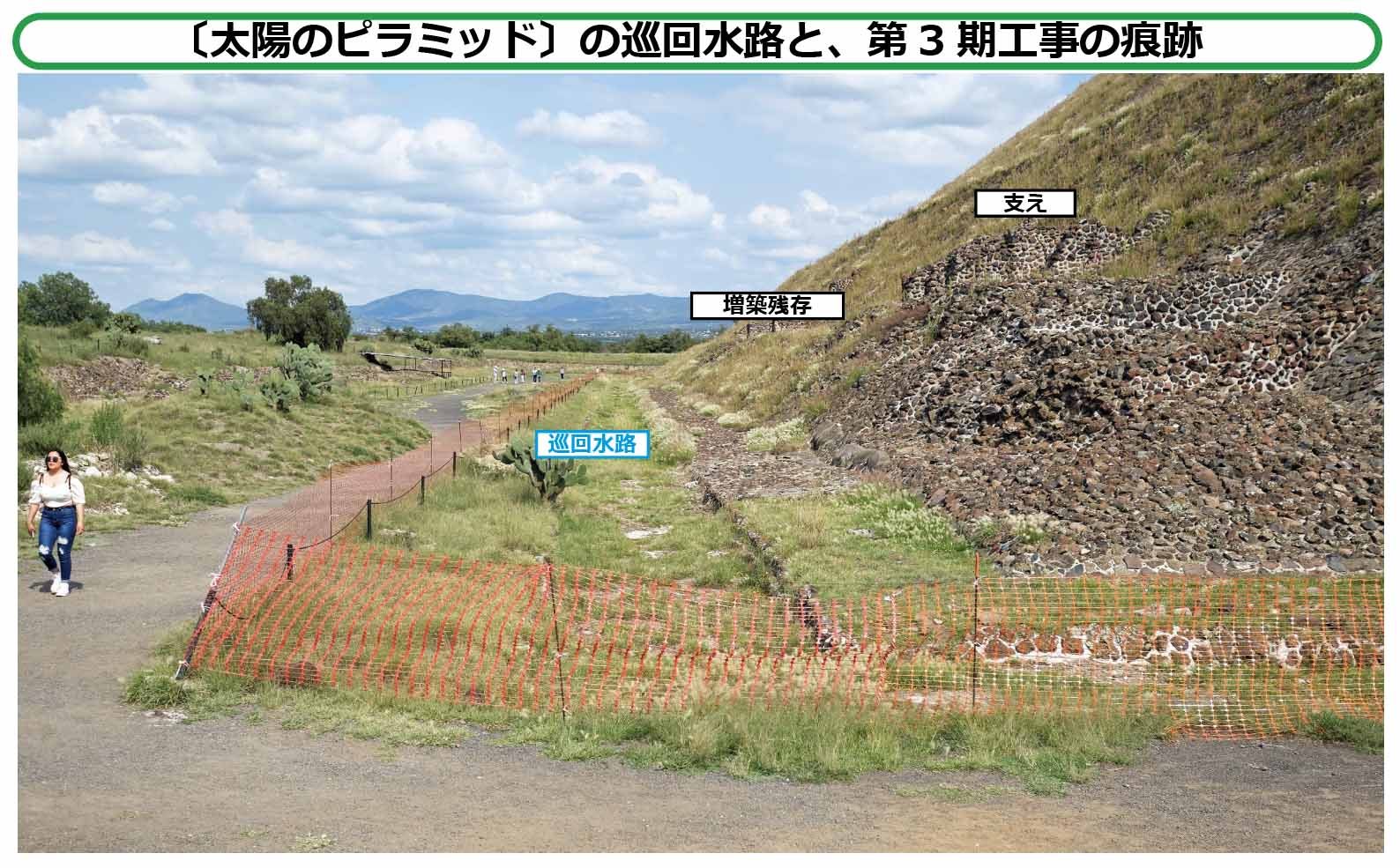
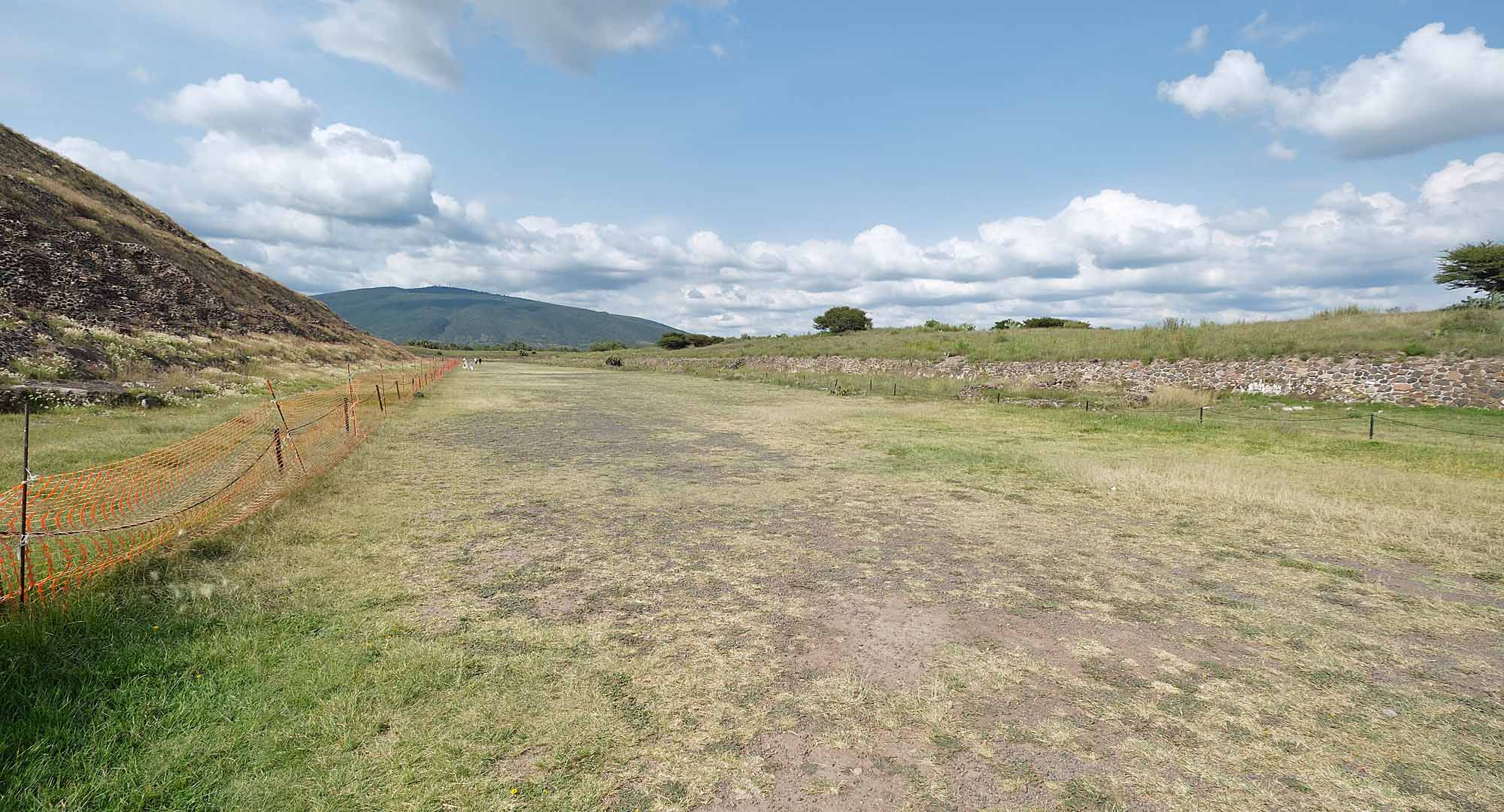
The pyramid itself is surrounded by a rectangular waterway, currently 3m wide and 50cm deep. It is unknown what the area around adosada was like, but it is believed that it was used as a stage for religious ceremonies.
The water probably came from the San Juan River to the northeast, and since it had to be replaced, it was probably channeled into the semi-underground plazas of the Street of the Dead, and eventually into the San Juan River just north of Ciudadela.
There are four layers
Currently, five layers are visible on the main pyramid. However, as clearly stated on the explanatory sign at the base, the division between the third and fourth layers from the bottom is an error made in the survey/restoration in 1906. I have corrected only one of the photos of the Pyramid of the Sun on this site.


The purpose of the 64m height
。The common belief is that the reason for designing the Pyramid of the Sun so huge is because they wanted the top tier to be 64 meters high. It is difficult to confirm this because climbing was not permitted in 2023 and 2024, but the following points have been pointed out.
1. When the structure was designed before 200 AD, many people were living in Teotihuacan as refugees from volcanic ash, and there was a fear of eruptions.
2. Popocatepetl, the largest active volcano, lies 60 km south-southeast and cannot be seen from Teotihuacan due to the hills to the south. However, eruptions were burned into the memory.
3. Leaders have an obligation to encourage volcanoes to refrain from erupting. Therefore, Popocatepetl needed to be 64 meters high, allowing direct visibility of the volcano.
4. To achieve this height, a foundation approximately 200 meters square was built.
This is a plausible theory. What took place on the top level? The details of the ritual have disappeared and are unknown. However, some of the equipment used has been excavated.
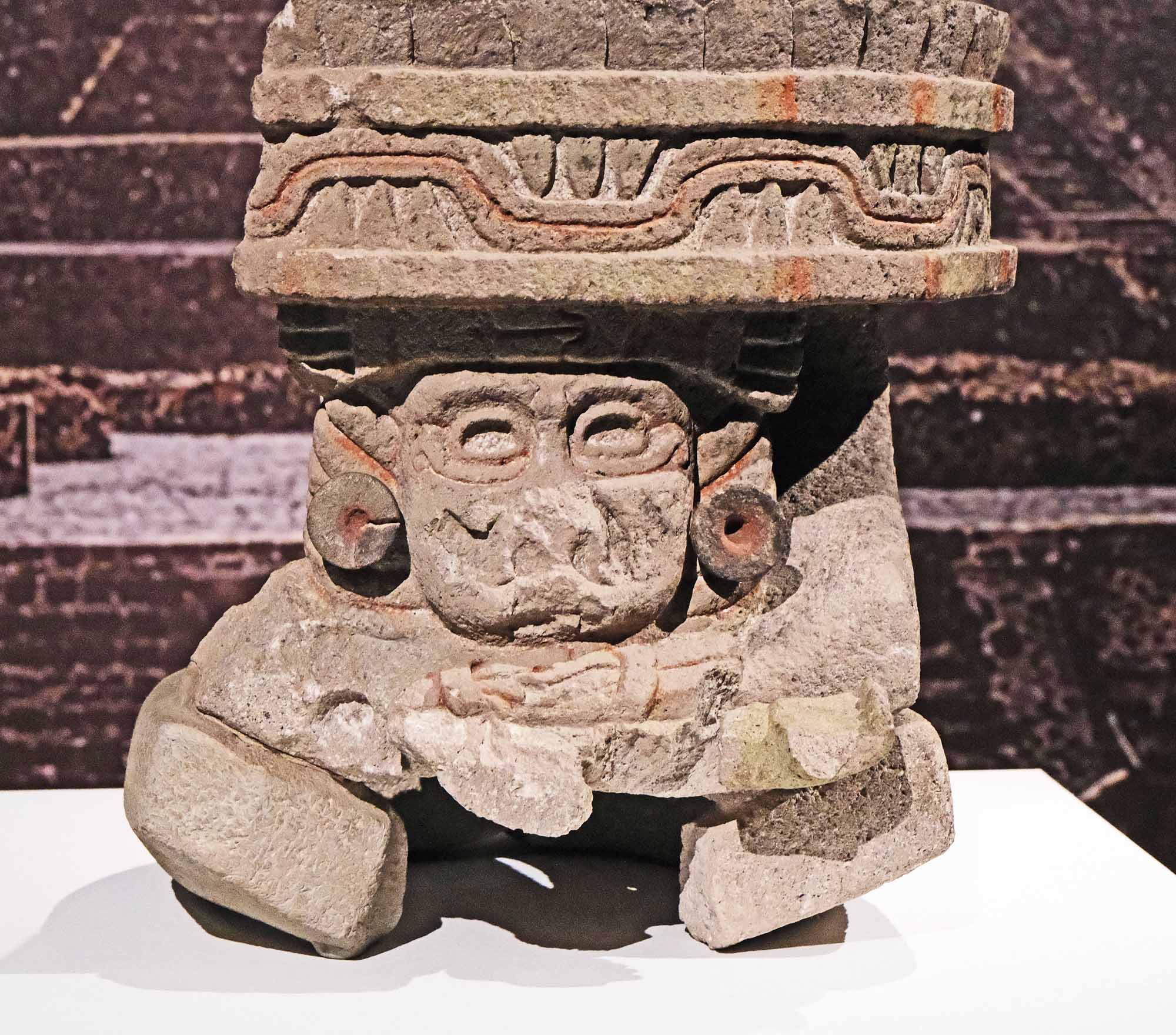
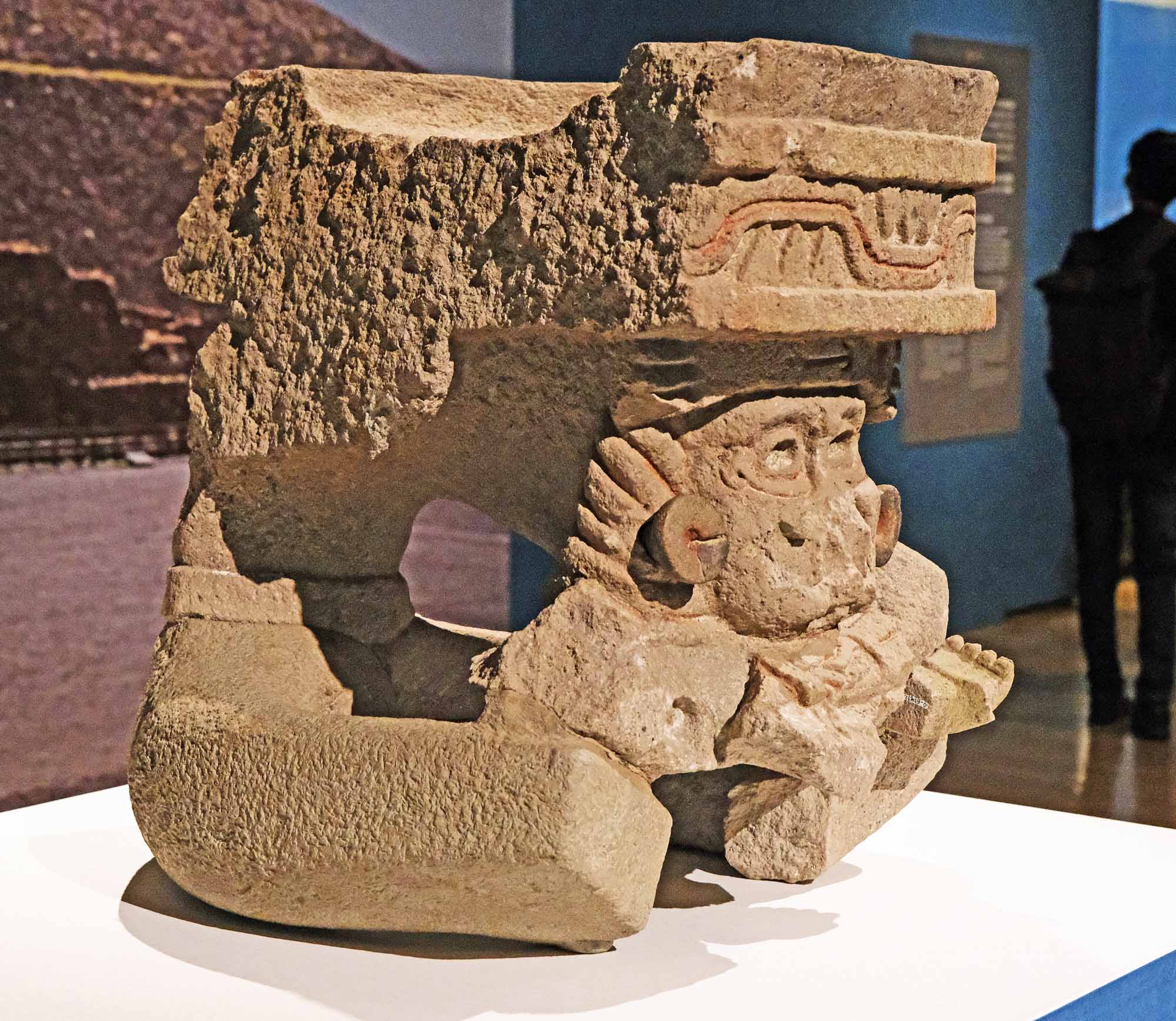
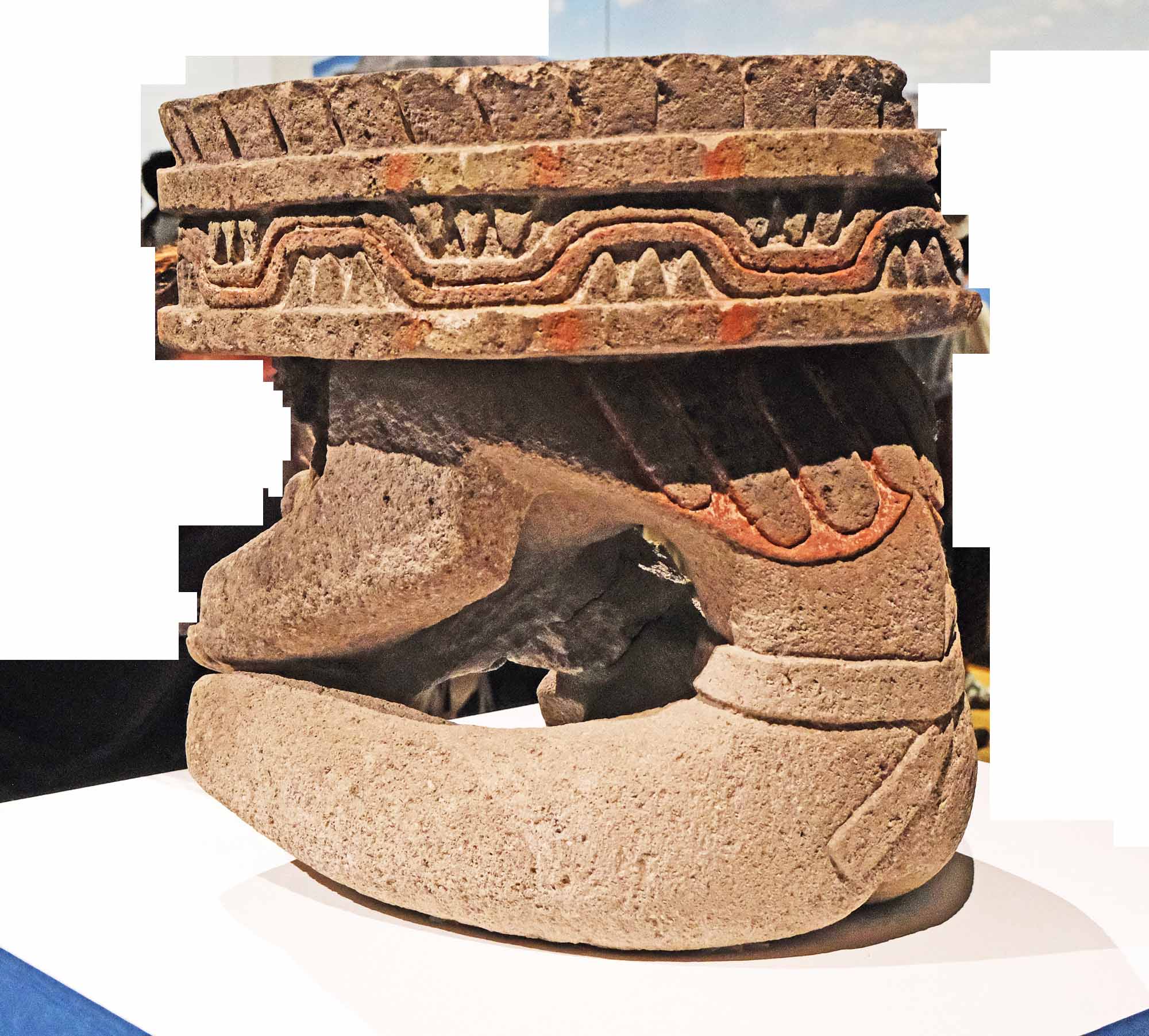
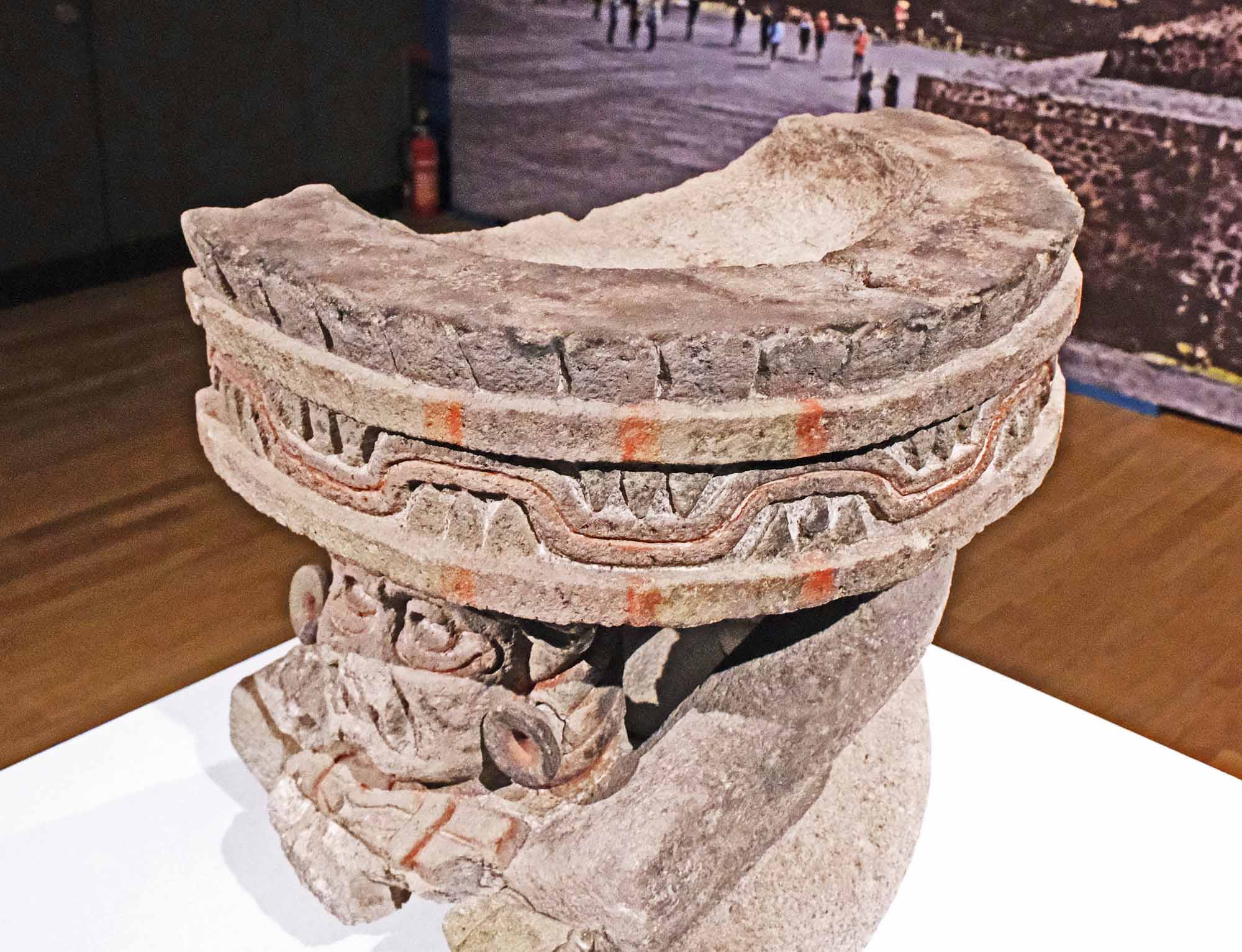
↑↑↑↑at Ancient Mexico Exhibition 2023 in Tokyo.
The statue of the Old Fire God combines facial wrinkles, a hunched back, and a brazier on his back. It seems that ordinary households also had these statues, and statues of various sizes have remained throughout Mesoamerica since ancient times. The photo above shows one that was excavated from a hole at the top of the Pyramid of the Sun. It was made between 450 AD and 550 AD.
It is reported that two other monoliths were also present. Although they are not on display, the photographs in the paper show that they resemble the ones in the Underground Astronomical Observatory, which will be discussed later.

↑at Mural Museum.
Also, a large hearth/brazier was reconstructed outside the Cultural Museum.


↑at Cultural Museum.
The location of the discovery cannot be clearly determined from the 1906 report by the archaeologist who determined that the main pyramid had five layers. It seems certain that the find was excavated from the pyramid itself or an attached temple. The words "52 years bundle" can apparently be read in the red area in the center.
Exterior wall decoration of the main body
One possibility is that the first phase of construction was heavily decorated, but was removed due to the thick plasterwork that had been in place for 350 AD, and then reapplied on top of the thick plasterwork, causing it to collapse. Today, remains of what are thought to have been exterior wall decorations were found lying around the pyramid. The remains that were found are shown in the photo below.
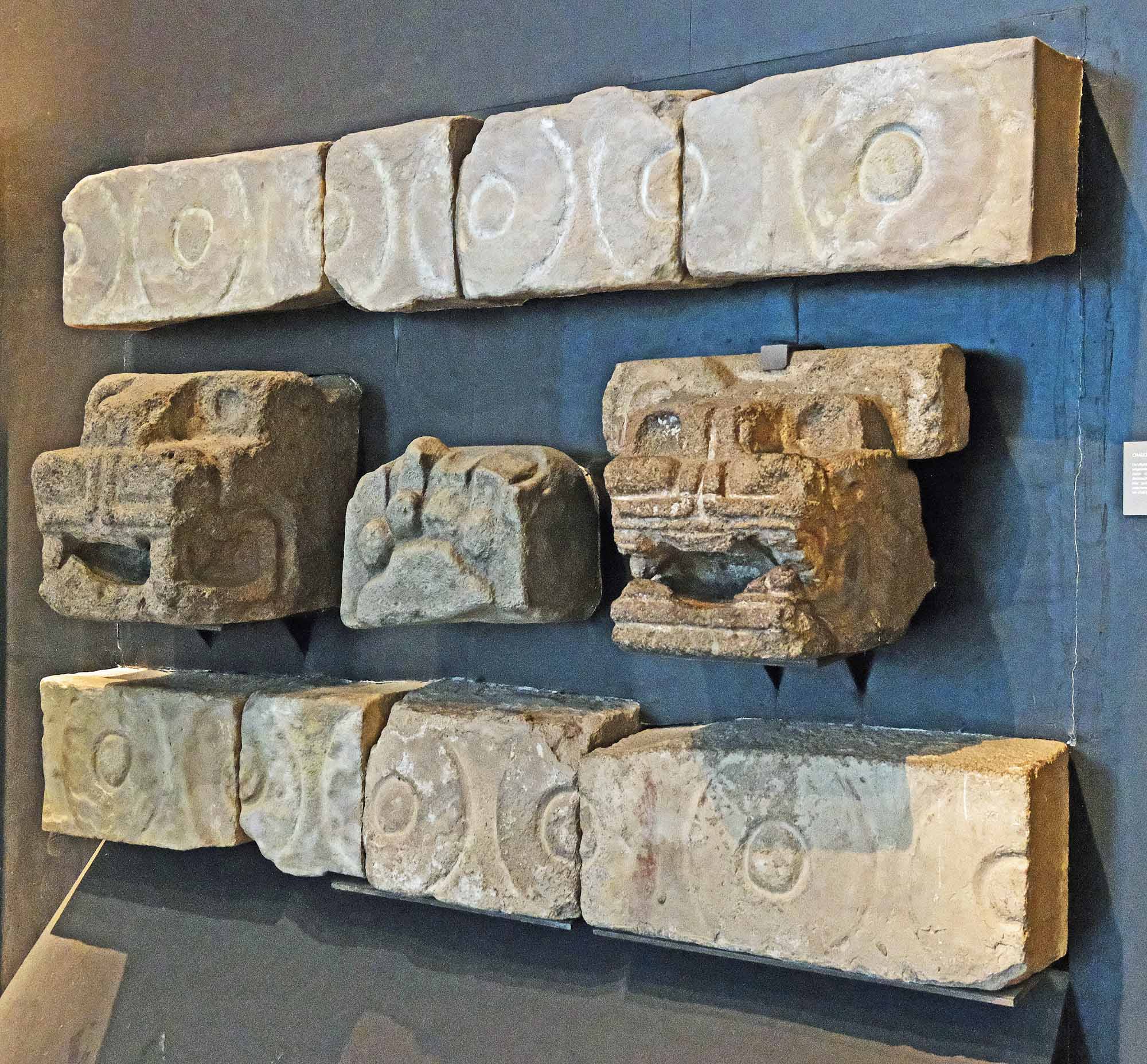

↑at Museum of Anthropology. ↑at Cultural Museum.
The jaguar's head and claws are mortise-shaped, so they would have been fitted into holes in the wall. Also, a series of thick circles reminiscent of Tlaloc appear to be arranged horizontally like a belt, which may be related to the excursion waterway.
Many other fragments and worn chunks of jaguar statues have been reported. The jaguar may have been the main deity of the Pyramid of the Sun.
Plaza of the Sun and the Central Altar
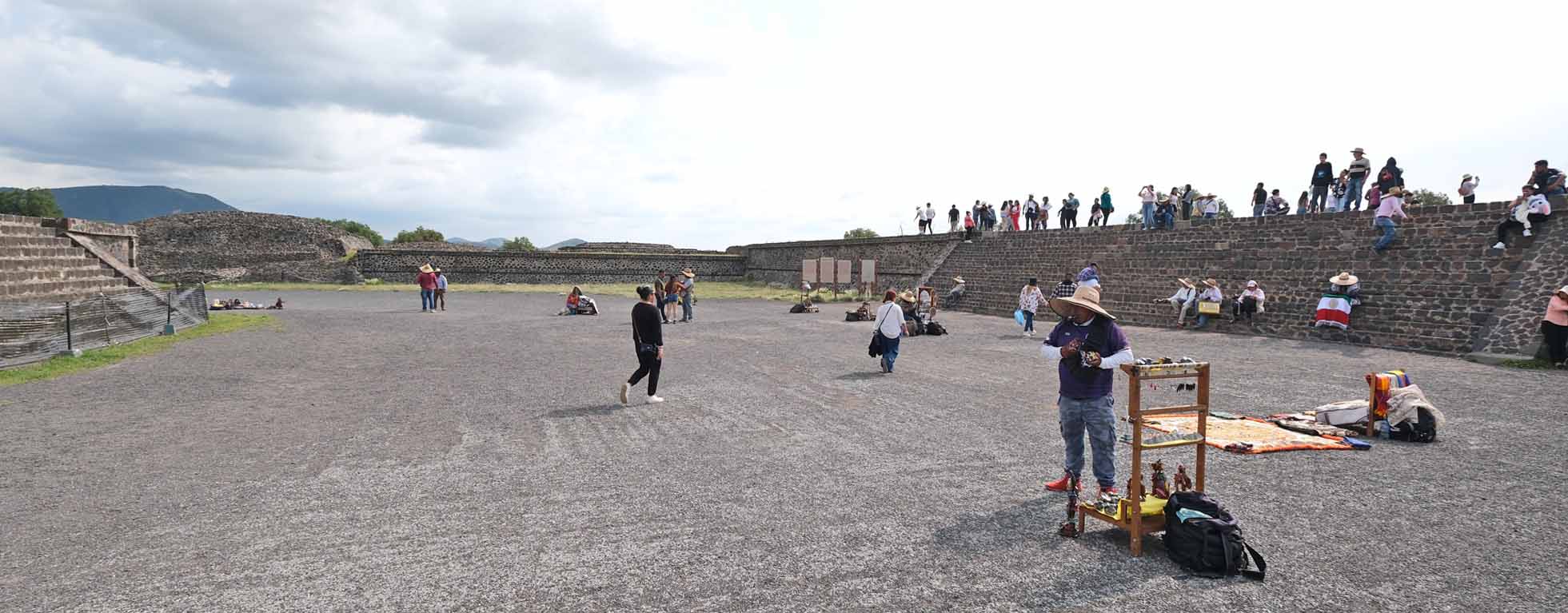
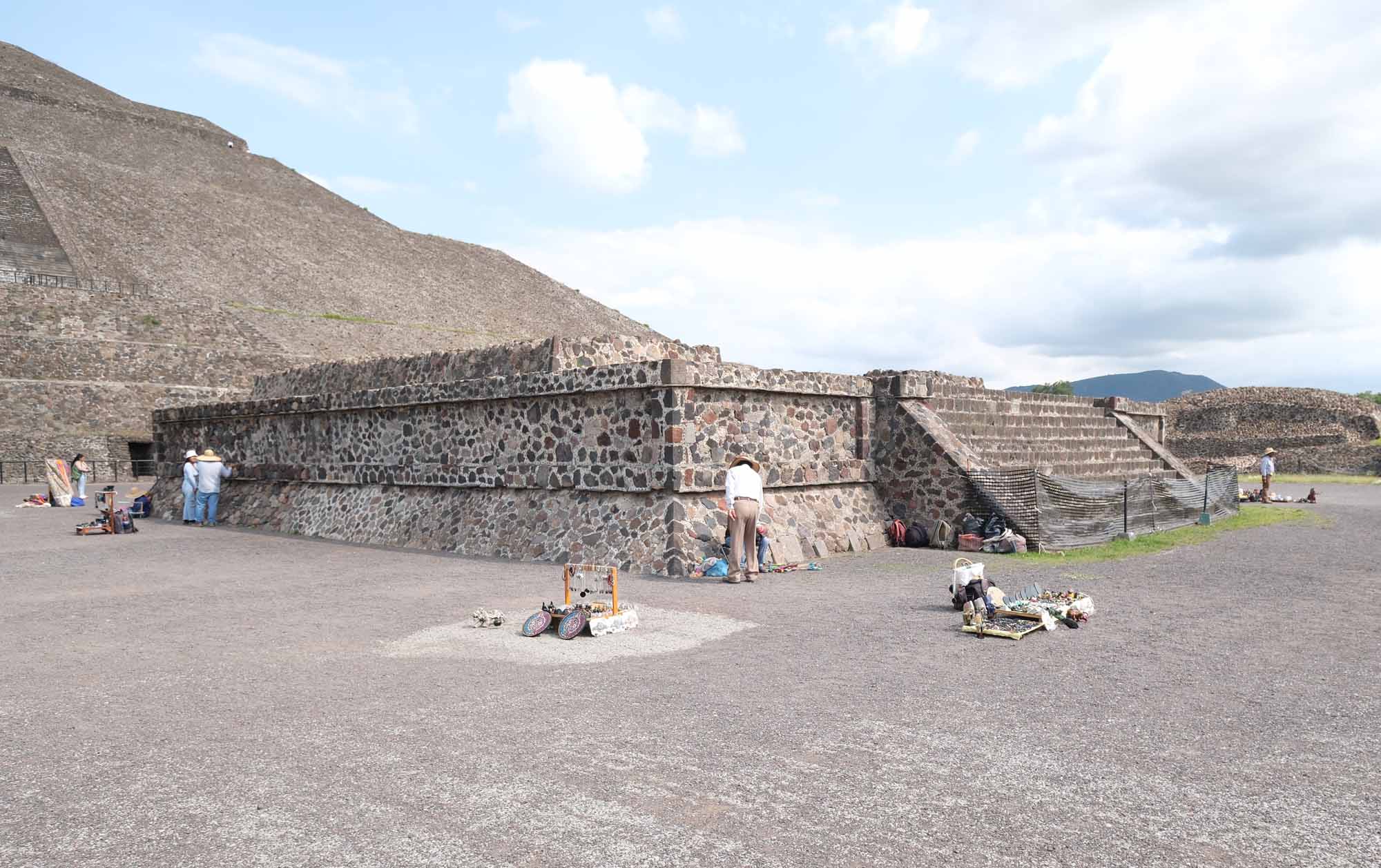
This is the official entrance to the Pyramid of the Sun. You can see it from the top of the platform, facing north, after climbing the central staircase on the left. The Plaza of the Sun is located down the platform to the right.
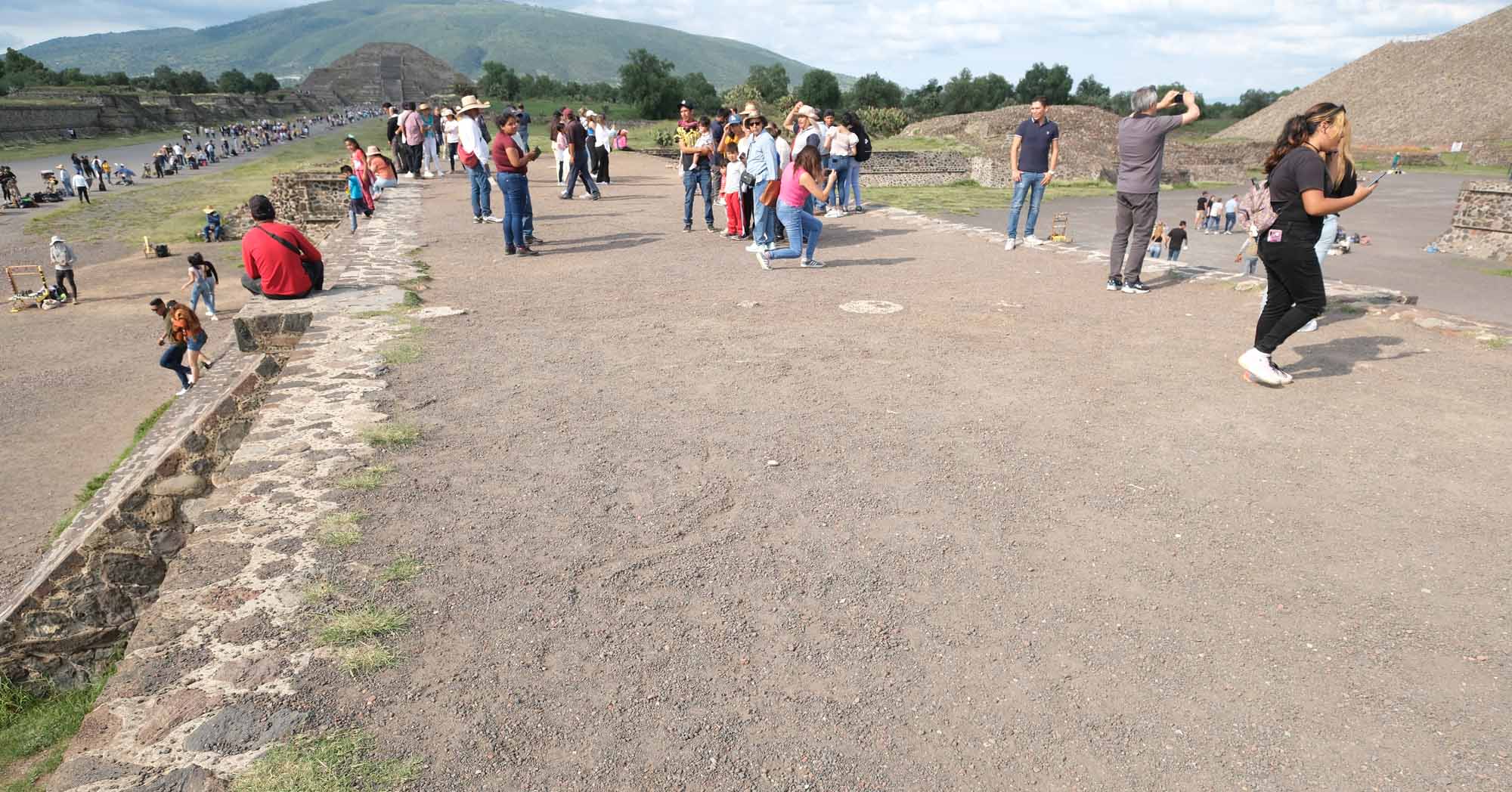
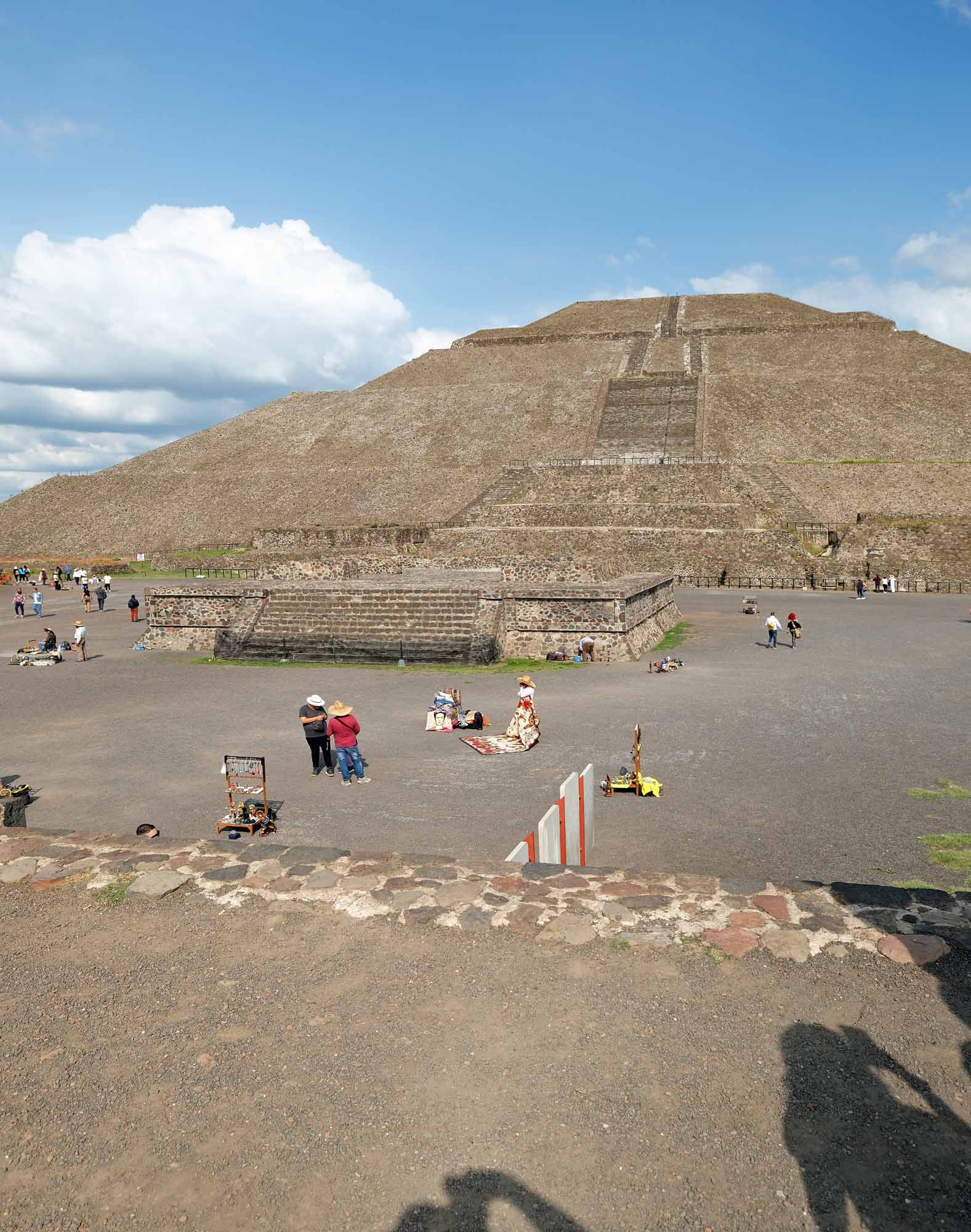
Compared to the Moon Plaza, which does not have a base like this, it can be said that access to this area is more restricted. In the middle is the central altar.
This is the Death Disc excavated in the Plaza of the Sun. 300 AD-550 AD.


↑↑at Ancient Mexico Exhibition in Tokyo...August 24, 2023.
Its diameter is 125cm. Its thickness makes it very impressive. It is said that the hole in the nostrils were created by stabbing the statue with an obsidian knife. The tongue is hanging out of the mouth. The Mexican government kindly allowed this famous artifact to be exhibited in Japan for one year. Thank you.
After seeing the Ancient Mexico exhibition, I headed straight to Narita Airport to begin my 2023 trip to Mexico. After spending a few days exploring Teotihuacan, I visited the National Museum of Anthropology in Mexico City. Standing at the entrance to the Teotihuacan room was a Death Disc.

↑at Museum of Anthropology…August 31, 2023.
Our guide said that there are many death discs, and that he's heard of smaller ones, but this one is broken and worn to the same extent as the others, so it must be an elaborate replica. However, we don't know which one is the real one, this one or the one in Tokyo, or if they're both replicas.
Greenstone mask and two serpentine statues


↑↑↑at Ancient Mexico Exhibition 2023 in Tokyo.
All of these dates to between 150 AD and 250 AD. They were discovered in a tunnel from that time inside the Pyramid of the Sun. Note that this tunnel is not the famous underground artificial tunnel, but a sort of passageway that was built at the lowest level when the pyramid was constructed. This is the entrance and exit.
"Teotihuacan Masks" exist in museums and secret exhibition rooms of enthusiasts around the world, likely because they were easily removed. There are very few masks with clear archaeological provenance, and this is one of them. It is 11 cm long. Earrings and other small details appear to have already been missing from the standing figures, which are 17 cm and 26 cm tall.
Artificial tunnels beneath the pyramids
The entrance is the Plaza of the Sun, and the tunnel dives 6.5 meters below the pyramid, then extends 108 meters eastward, horizontally beneath the pyramid, not in a straight line but snaking gracefully like a wriggling snake. Along the way, there are two side short tunnels that resemble waiting rooms, and at the end there are four rooms reminiscent of a four-petal flower.
The base of the pyramid is about 200m square, so 108m from the front doesn't quite reach the center of the pyramid. Was there a reason they couldn't dig another dozen meters?
For a long time after the tunnel was discovered, it was believed that it was an altered version of an existing natural cave. Today, it is concluded that it is entirely man-made, since there are no other caves in the center of Teotihuacan, and the geological conditions are not such that a natural formation would occur.
The tunnel, which was supposed to be filled with various offerings, had been completely plundered. Archaeologists examined the fragments of the remains, searching the four innermost chambers for traces of the king's body and any grave goods suitable for a king. Unfortunately, the results were disappointing.
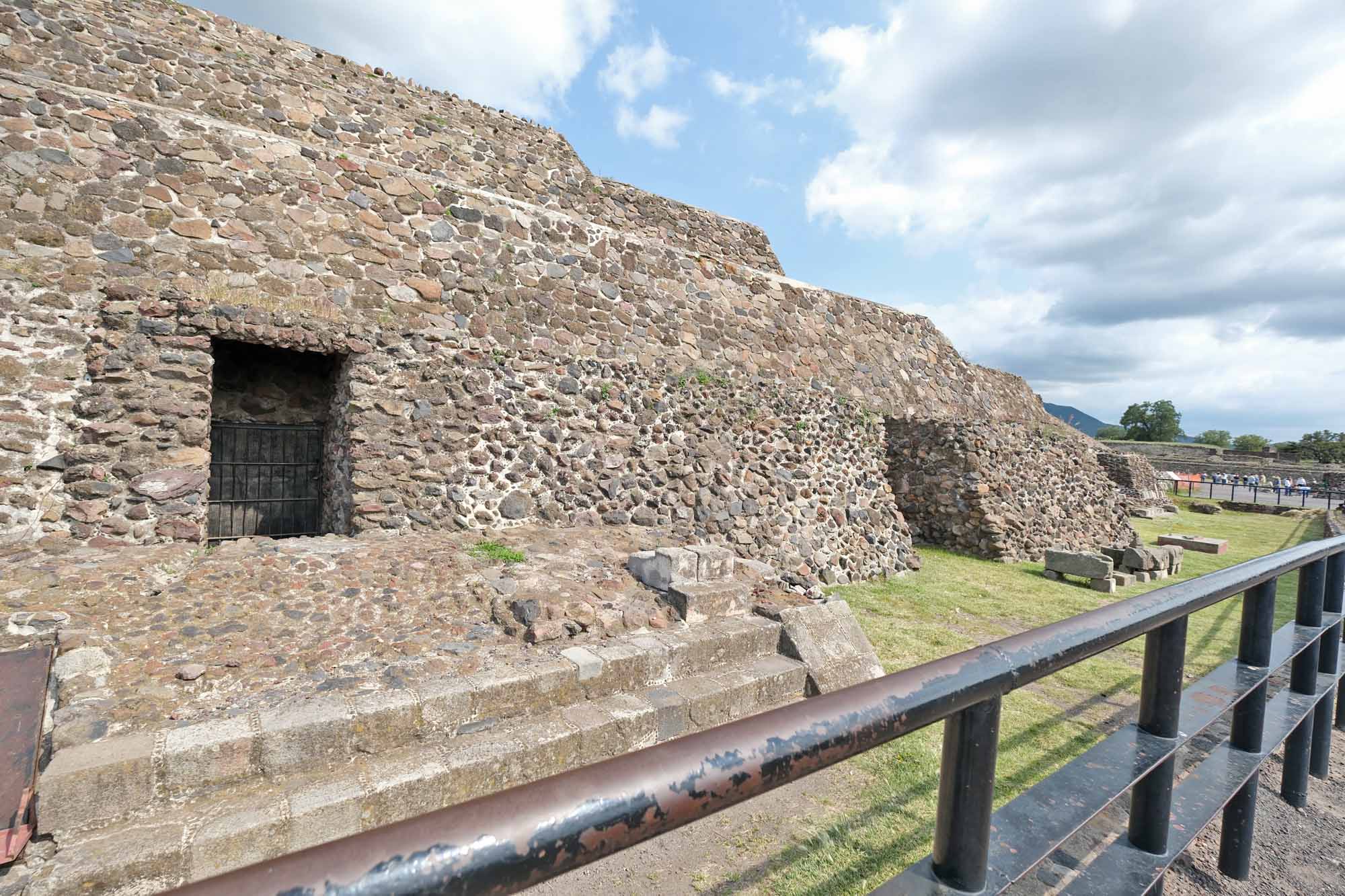
Corridor and platform
From left to right: the pyramid itself, traces of additional layers, a waterway, a corridor, and the platform.
It seems that there was a temple or a storehouse for priestly equipment on top of the platform, but looking at Google Maps, nothing remains.

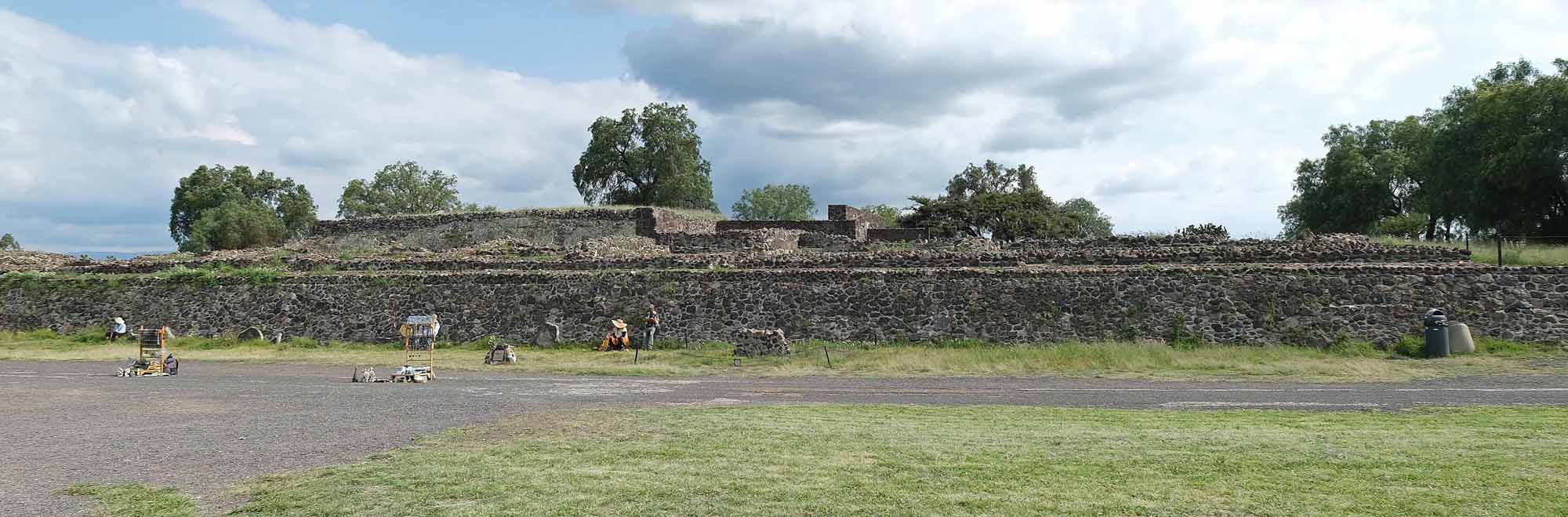
Priest's Residence
Behind the southern platform, there is a magnificent-looking building. The photo below was taken from the north.

↑at Museum of Anthropology.
It was burned in 550 AD. A 72 cm green stone statue dating from 150 AD-250 AD was destroyed.
Sun Palace Residence
The "Palace," which I don't really like to use, is located on the opposite side of the "Priest's House," to the north of the plaza of the sun. It seems that it has not been excavated in detail, and I could not find any research papers on it.
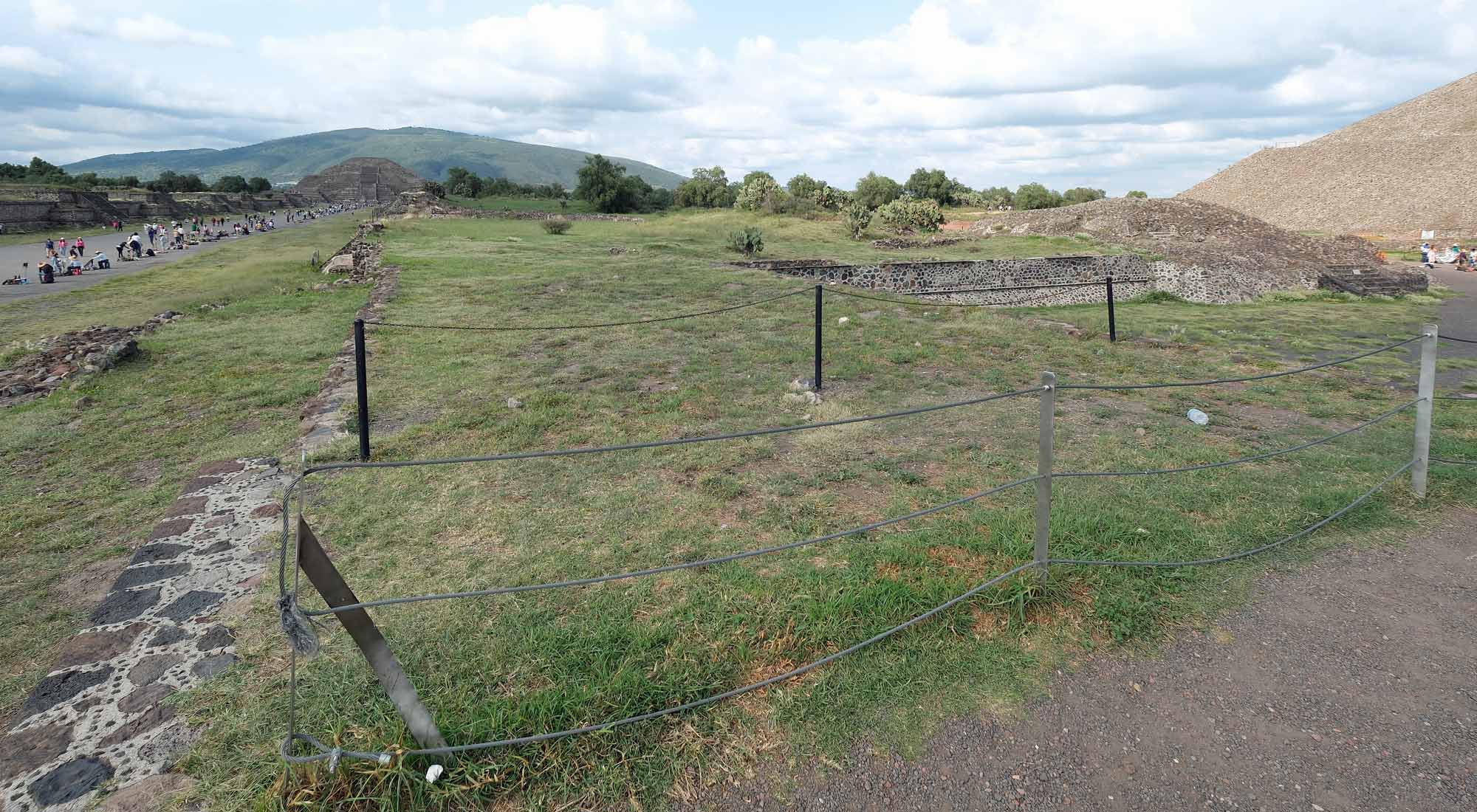
In the upper right, you can see the part of the mound that is still standing, and the wall in the northern half.
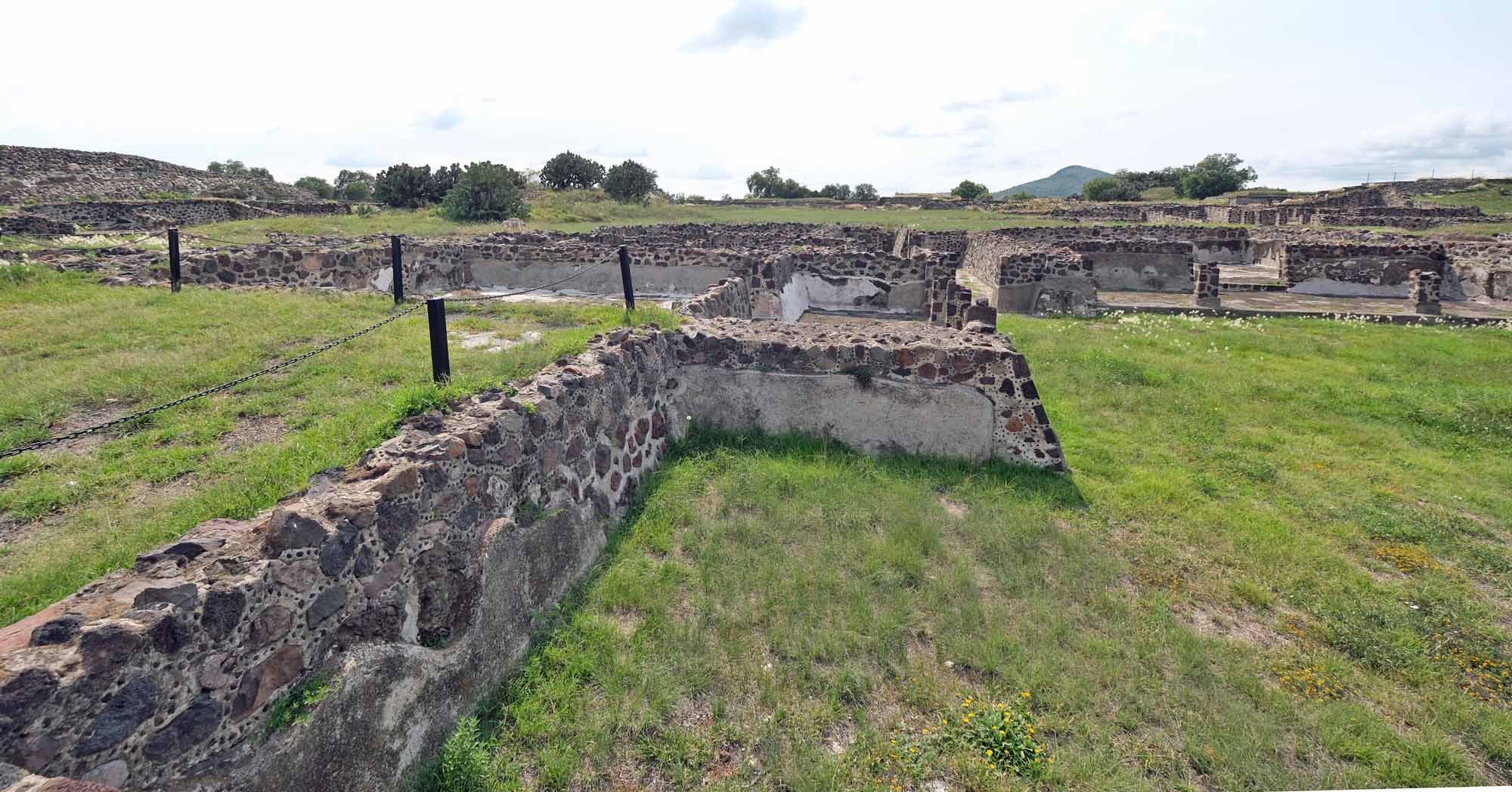
I heard that this area was designed in a way that made it difficult for outsiders to enter at the time. There is also a story that the Mexica people who arrived after 1300 AD built some simple structures there.
After 550 AD
It takes about 1 km to walk around the entire corridor. Near the northern platform of the northern corridor, the remains of a much-dilapidated dwelling can be seen peeking out from the weeds.
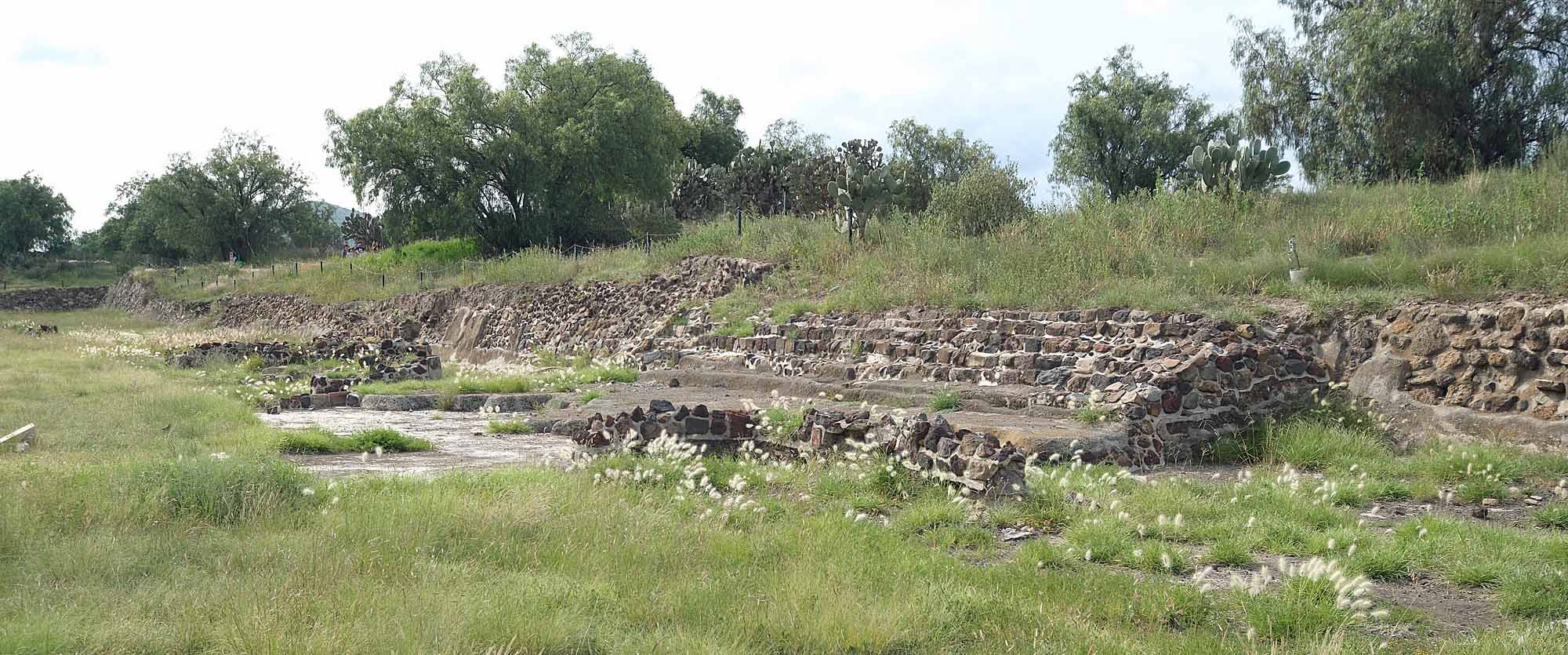
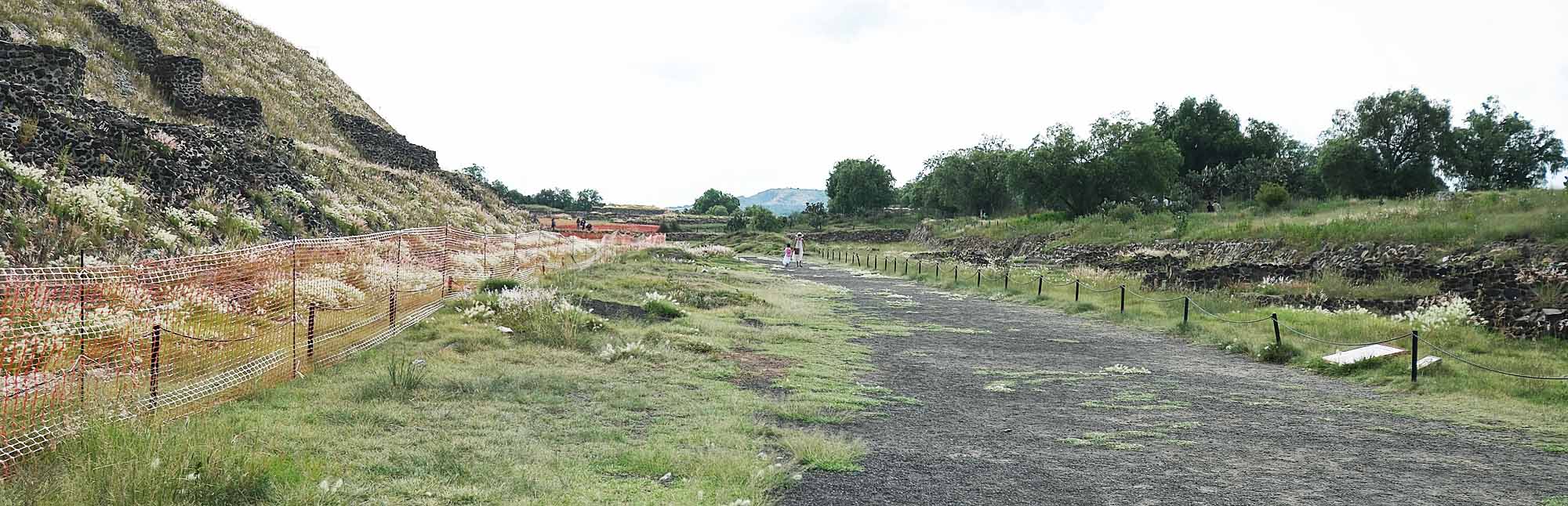
These are traces of houses built by people who began to live here after the Teotihuacan government was abolished. There is little order to the architecture. No detailed excavations seem to have been carried out. Some say they date back to around 800 AD.
Cut-through to the Cultural Museum
Just south of the southeast corner of the Pyramid of the Sun is the Teotihuacan Cultural Museum, and to make it easier to get there, Inah carved a cut through the platform.

Looking south from the east corridor. You can see the notch in the center. The photo below was taken from the south corridor.
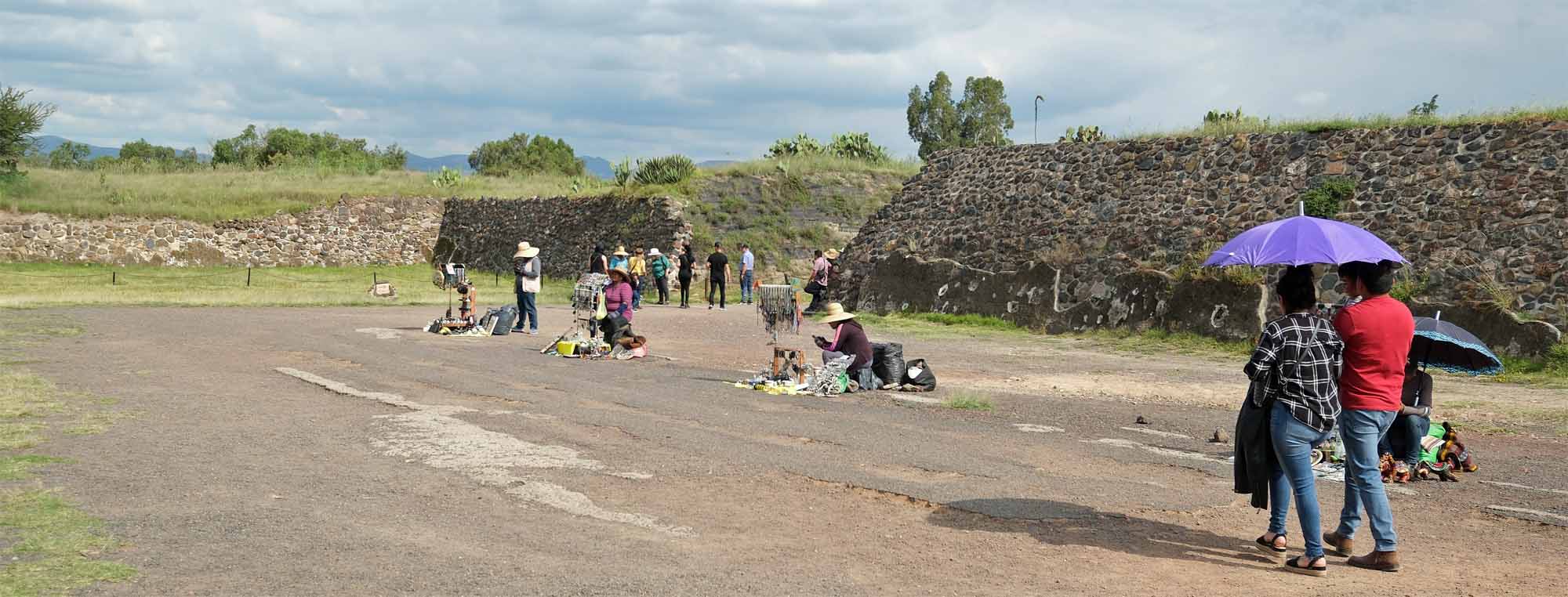
This is a cross section of the cut. Most of the inside is made of sun-dried bricks, with stone lining the walls.

Even so, Inah seems to have the audacity to destroy a part of ruins for the convenience of tourists. I wish he would be bold enough to allow people to climb the Pyramid of the Moon and the Pyramid of the Sun. Oh, no, it's probably just a activity of his desire to enlighten people and let them have a good look at the architectural structure of the platform.